
16Oct
Normal Cholesterol but High Heart Risk? Advanced Heart Risk Tests Explained
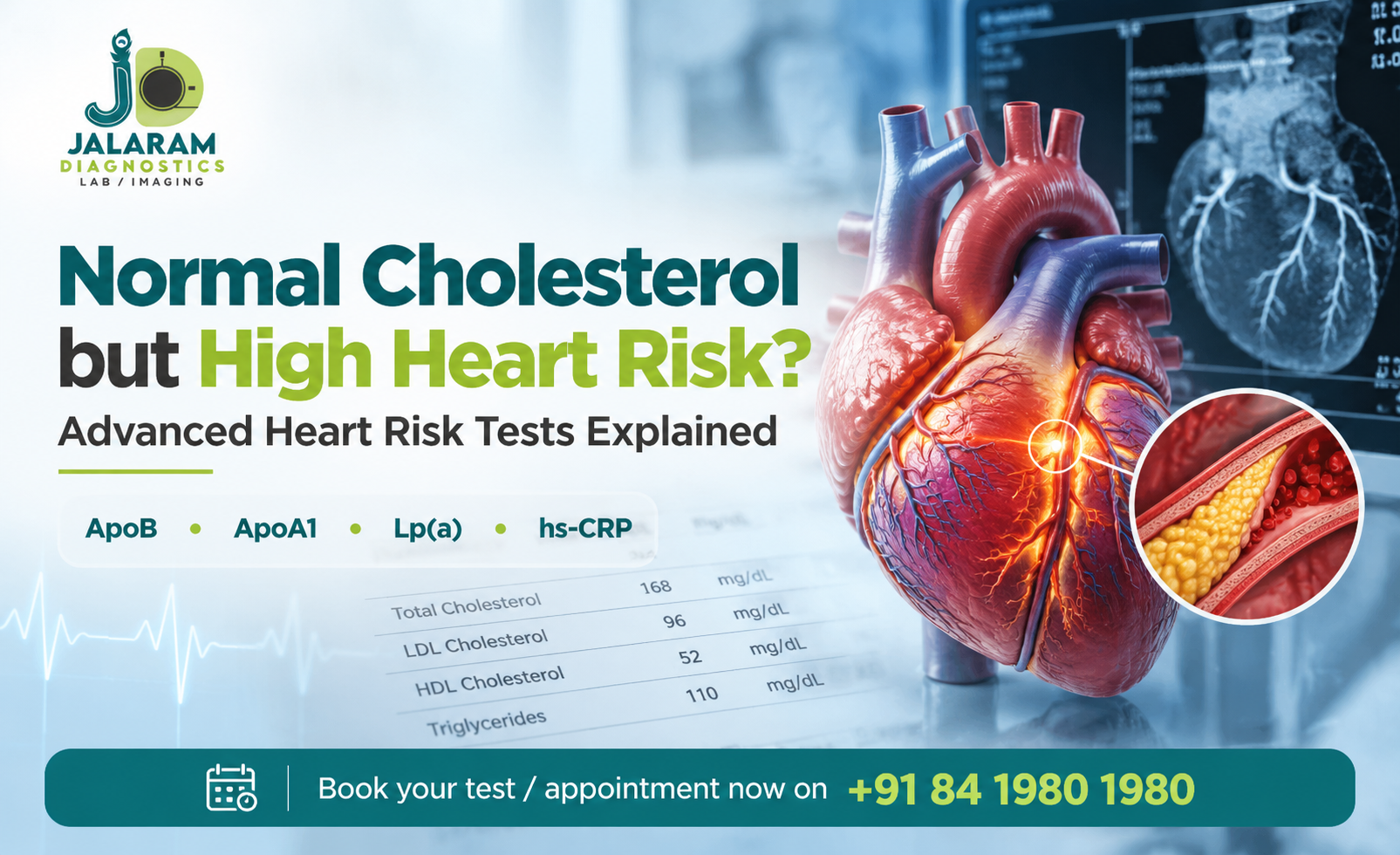
A normal cholesterol report can be reassuring, but it does not always tell the complete story of your heart health. Your overall cardiovascular risk also depends on factors such as blood pressure, diabetes, smoking, family history and certain additional blood markers.
For Indian adults, this matters because heart-risk assessment should consider more than a single laboratory value. The Lipid Association of India and the Cardiological Society of India have published recommendations on lipid management and cardiovascular risk assessment, including the role of selected advanced markers in appropriate clinical situations.
What Does a Normal Cholesterol Report Mean?
A routine lipid profile measures total cholesterol, LDL cholesterol, HDL cholesterol and triglycerides. These values help doctors assess cardiovascular risk and decide whether lifestyle changes or treatment may be needed.
However, a result within the laboratory’s reference range does not automatically mean that your overall heart risk is low. For example, someone with diabetes, high blood pressure or a strong family history of early heart disease may need a more detailed assessment even if their routine cholesterol values look acceptable.
Advanced heart-risk tests can provide additional information, but they are not necessary for everyone. The choice depends on personal risk factors and a doctor’s assessment.
6 Advanced Heart-Risk Markers to Know About
1. ApoB (Apolipoprotein B)
ApoB helps estimate the number of cholesterol-carrying particles that can contribute to plaque formation in arteries. It may be particularly useful when routine lipid values do not fully reflect a person’s risk, including some people with high triglycerides.
2. ApoA1 (Apolipoprotein A1)
ApoA1 is the main protein component of HDL, often called “good cholesterol.” Measuring ApoA1 can provide additional information about HDL-related particles. It is interpreted alongside other lipid markers and clinical risk factors, rather than on its own.
3. Lp(a) — Lipoprotein(a)
Lp(a) is a largely inherited lipoprotein associated with cardiovascular risk. A person may have elevated Lp(a) even when their routine cholesterol results appear normal. Testing may be particularly worth discussing when there is a family history of premature heart disease or other significant risk factors.
4. hs-CRP (High-Sensitivity C-Reactive Protein)
hs-CRP measures low levels of inflammation in the body. It may help refine cardiovascular risk assessment in selected cases, but infections and other inflammatory conditions can also raise the result. It is not a direct test for artery blockage.
5. Homocysteine
Homocysteine is an amino acid measured in blood. Elevated levels have been associated with cardiovascular risk, but the result alone cannot establish heart disease or predict an event with certainty. Doctors may consider it in specific clinical situations.
6. Lp-PLA2 (Lipoprotein-Associated Phospholipase A2)
Lp-PLA2 is a marker associated with vascular inflammation. It may offer additional information in selected assessments, but its role is more specialised, and it should not be treated as a routine screening test for everyone.
Who Should Discuss Advanced Heart-Risk Testing?
These tests may be worth discussing with a doctor if you have:
- A family history of heart disease at a relatively young age.
- Diabetes, high blood pressure or high triglycerides.
- Existing cardiovascular disease or several risk factors together.
- A routine lipid profile that does not fully explain your overall risk.
Not everyone needs all six tests. Some markers are more established for risk assessment than others, and the results must be interpreted in context. Advanced blood tests also cannot replace medical evaluation or imaging when these are indicated.
How Jalaram Diagnostics Can Help
At Jalaram Diagnostics, Bardoli, patients can explore diagnostic testing options relevant to their health concerns, including routine and advanced laboratory investigations. If you are concerned about your heart health, discuss your family history, existing reports and risk factors with your doctor. Based on that assessment, the doctor can advise whether markers such as ApoB, ApoA1, Lp(a), hs-CRP, Homocysteine or Lp-PLA2 are appropriate. The goal is to support informed preventive-health decisions through relevant testing and professional interpretation.
Do not wait for symptoms to start thinking about prevention. Speak with your doctor about the heart-risk assessment that suits you.
📞 Book your test / appointment now on +91 84 1980 1980
Frequently Asked Questions
Can I have high heart risk with normal cholesterol?
Yes. Other risk factors, including elevated Lp(a), diabetes, high blood pressure and family history, can influence cardiovascular risk even when routine cholesterol results look normal.
Should everyone get all six advanced tests?
No. A doctor can decide which tests, if any, are appropriate based on your health history, existing reports and risk profile.
Can these blood tests detect blocked arteries?
No. These markers assess different aspects of cardiovascular risk; they do not directly show whether an artery is blocked. Further evaluation may be needed if clinically indicated.