
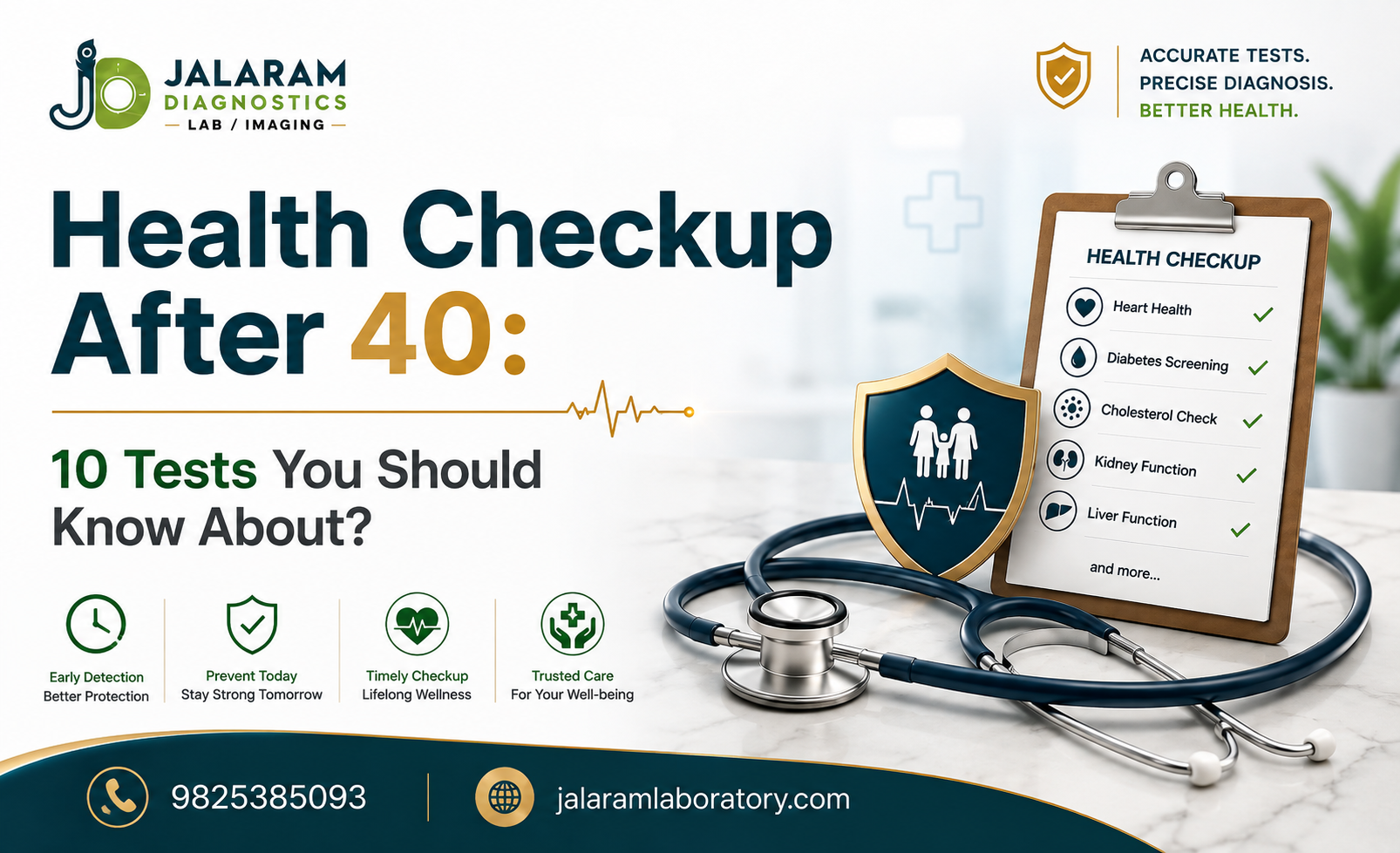
Turning 40 is an important time to become more proactive about your health. Some conditions, such as high blood pressure, diabetes and high cholesterol, can develop without noticeable symptoms. Regular health screening can help identify potential risk factors early and help you and your healthcare professional decide which tests may be appropriate. A health checkup after 40 does not mean everyone needs every available test every year. Your screening plan depends on your age, sex, family history, lifestyle, existing health conditions and previous test results. 10 Tests and Screenings to Know About After 40 Heart & Metabolic Health 1. Blood Pressure Check High blood pressure can remain unnoticed for years. Regular blood pressure checks can help identify elevated readings early. Adults aged 40 and above may benefit from regular screening, with the frequency depending on individual risk and previous readings. 2. Blood Sugar / HbA1c Fasting blood sugar and HbA1c can help assess blood glucose levels. These tests can also help screen for prediabetes and type 2 diabetes. Screening recommendations depend on age and risk factors such as overweight or obesity. Your healthcare professional can recommend the appropriate testing schedule. 3. Lipid Profile A lipid profile measures cholesterol and triglycerides. These results can help assess cardiovascular risk and support preventive health planning. Regular monitoring may be particularly useful when you have risk factors such as a family history of heart disease, diabetes or high cholesterol. Blood & Organ Health 4. Complete Blood Count (CBC) A Complete Blood Count measures different types of blood cells. It can provide useful information about conditions such as anemia and other blood-related abnormalities. Whether you need a CBC as part of routine screening depends on your symptoms, medical history and healthcare professional’s advice. 5. Kidney Function Tests Kidney function testing measures markers related to how well the kidneys are working. These tests may be particularly relevant for people with diabetes, high blood pressure or other kidney-related risk factors. Your healthcare professional can determine which kidney tests are appropriate for you. 6. Liver Function Tests Liver function testing measures several markers that provide information about liver health. Testing may be recommended based on symptoms, medical history, medication use or other risk factors. Routine testing is not necessarily required for everyone. Hormonal & Cardiac Screening 7. Thyroid Tests Tests such as TSH, T3 and T4 may be recommended when thyroid problems are suspected. Symptoms, medical history and previous results can help determine whether thyroid testing is appropriate. Your healthcare professional can advise which thyroid tests may be needed. 8. ECG / Heart Screening An ECG records the heart’s electrical activity. It can provide useful information when certain heart-related symptoms or concerns are present. An ECG is not automatically required simply because someone has reached 40. The need for cardiac screening depends on symptoms, medical history and cardiovascular risk. Age-Appropriate & Nutritional Screening 9. Cancer Screening Cancer screening should be based on the type of cancer, age and individual risk. For example, the U.S. Preventive Services Task Force recommends mammography every two years for women aged 40–74. Colorectal cancer screening is recommended beginning at age 45 for average-risk adults. Screening recommendations can vary based on personal and family history, so discuss appropriate screening with your healthcare professional. 10. Vitamin and Nutritional Tests Tests such as Vitamin B12, Vitamin D and iron studies may be considered when symptoms, dietary factors or medical history suggest a possible deficiency. These tests are not necessarily required for everyone. Testing should be based on individual needs and professional advice. Does Everyone Need a Full Body Checkup After 40? A full body health checkup can be useful as part of preventive healthcare, but there is no single set of tests that is right for everyone. Some people may need more frequent monitoring because of family history, lifestyle, existing health conditions or previous abnormal results. Others may need specific screenings at longer intervals. The goal is not to take every possible test. The goal is to identify the screenings and diagnostic tests that are relevant to your health. How Jalaram Diagnostics Can Help Jalaram Diagnostics supports preventive health screening with a range of diagnostic services under one roof. Its specialized health panels cover areas such as: Jalaram Diagnostics also provides pathology, imaging and cardiac diagnostic services. Multiple reports can be available within a short turnaround time, with many reports available on the same day. This can make it easier to organize your preventive health screening and keep track of important health information. Why Regular Health Screening Matters After 40 Your health needs can change as you get older. Regular screening can help you and your healthcare professional monitor important risk factors and decide when further evaluation may be needed. Instead of waiting for symptoms to appear, preventive healthcare focuses on understanding your health risks and taking appropriate action early. Frequently Asked Questions Is a full body checkup necessary after 40? Preventive screening can be useful after 40, but the tests you need should be based on your individual health profile rather than a fixed list. Should I get all 10 tests every year? Not necessarily. Some tests may be repeated regularly, while others may be recommended at different intervals or only when specific symptoms or risk factors are present. What should I include in a health checkup after 40? A healthcare professional can help determine the appropriate combination of blood tests, cardiovascular assessments and age- or risk-based screenings for you. How often should you get a health checkup after 40? There is no single schedule that applies to everyone. The frequency of your health checkups depends on your age, health history, risk factors, previous results and the type of screening involved. What age should you start a full body health checkup? There is no universal age at which everyone must begin a full body checkup. Around 40 can be a useful time to discuss preventive screening with a healthcare professional and review your individual risk factors. Take the Next Step Towards Preventive Health Your
