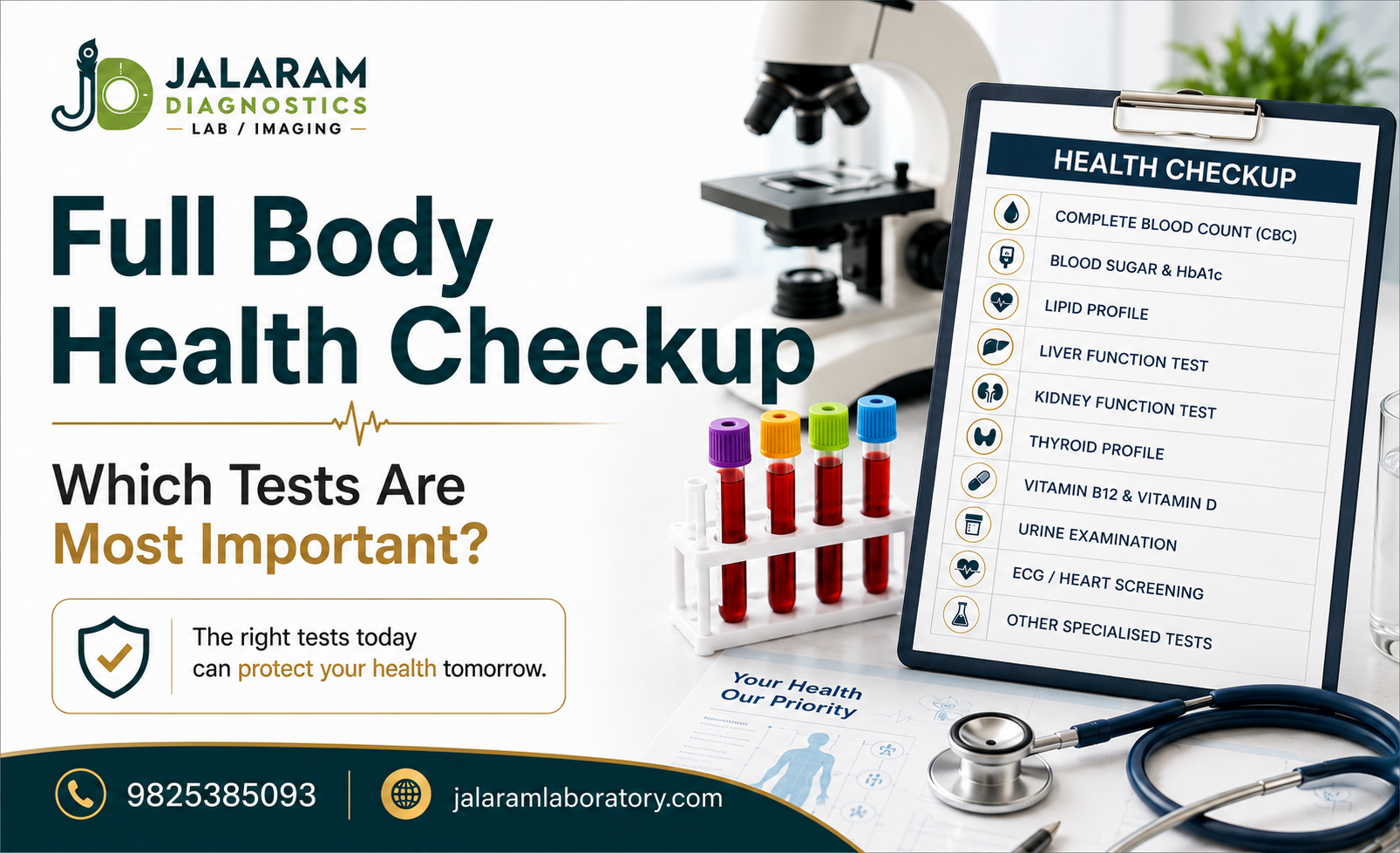
If you are planning a full body health checkup, you may wonder which tests are actually important. A good health checkup is not simply about doing as many tests as possible. The right tests should provide useful information about major areas such as blood sugar, cholesterol, liver, kidneys, blood cells and thyroid function. The tests you need can vary depending on your age, family history, lifestyle, symptoms and existing health conditions. A healthcare professional can help decide which investigations are appropriate for you. What Is a Full Body Health Checkup? A full body health checkup is a preventive health assessment that combines different laboratory tests and, when appropriate, other diagnostic investigations. It can help identify health parameters that may need attention, even when you do not have noticeable symptoms. There is no single standard list that is necessary for everyone. A useful checkup should be selected according to individual health needs rather than simply the number of tests included. Which Tests Are Most Important? Some commonly useful tests in a comprehensive health checkup include: Depending on your health profile, additional assessments such as an ECG, heart health screening or specialised metabolic testing may also be relevant. Why Is Choosing the Right Tests Important? More tests do not always mean a better checkup. Some investigations are useful for routine screening, while others are more appropriate when a person has particular symptoms or risk factors. For example, someone with a family history of diabetes may need closer attention to blood glucose and HbA1c, while a person with cardiovascular risk factors may benefit from a more detailed heart risk assessment. Your doctor can help determine which tests provide meaningful information for you. How Jalaram Diagnostics Can Help A comprehensive health checkup should go beyond routine tests when your health profile requires it. Jalaram Diagnostics offers diagnostic options covering areas such as Heart Risk, Advanced Metabolic Risk, Organ Health, Insulin Resistance, Vitamin Status and Diabetic Risk, along with routine laboratory investigations. This allows health screening to be tailored to different health concerns rather than relying on a one-size-fits-all approach. Understand your health with the right tests and diagnostic support at Jalaram Diagnostics. Frequently Asked Questions Which blood tests are important in a full body checkup? CBC, blood sugar or HbA1c, lipid profile, liver and kidney function tests are commonly considered useful, depending on individual health needs. Is a full body checkup necessary every year? Not everyone needs the same tests every year. The frequency should depend on age, health history, risk factors and previous results. Should I get Vitamin D and B12 tests? These tests may be useful when symptoms, dietary factors or other risk factors suggest a possible deficiency. They are not automatically required for everyone.
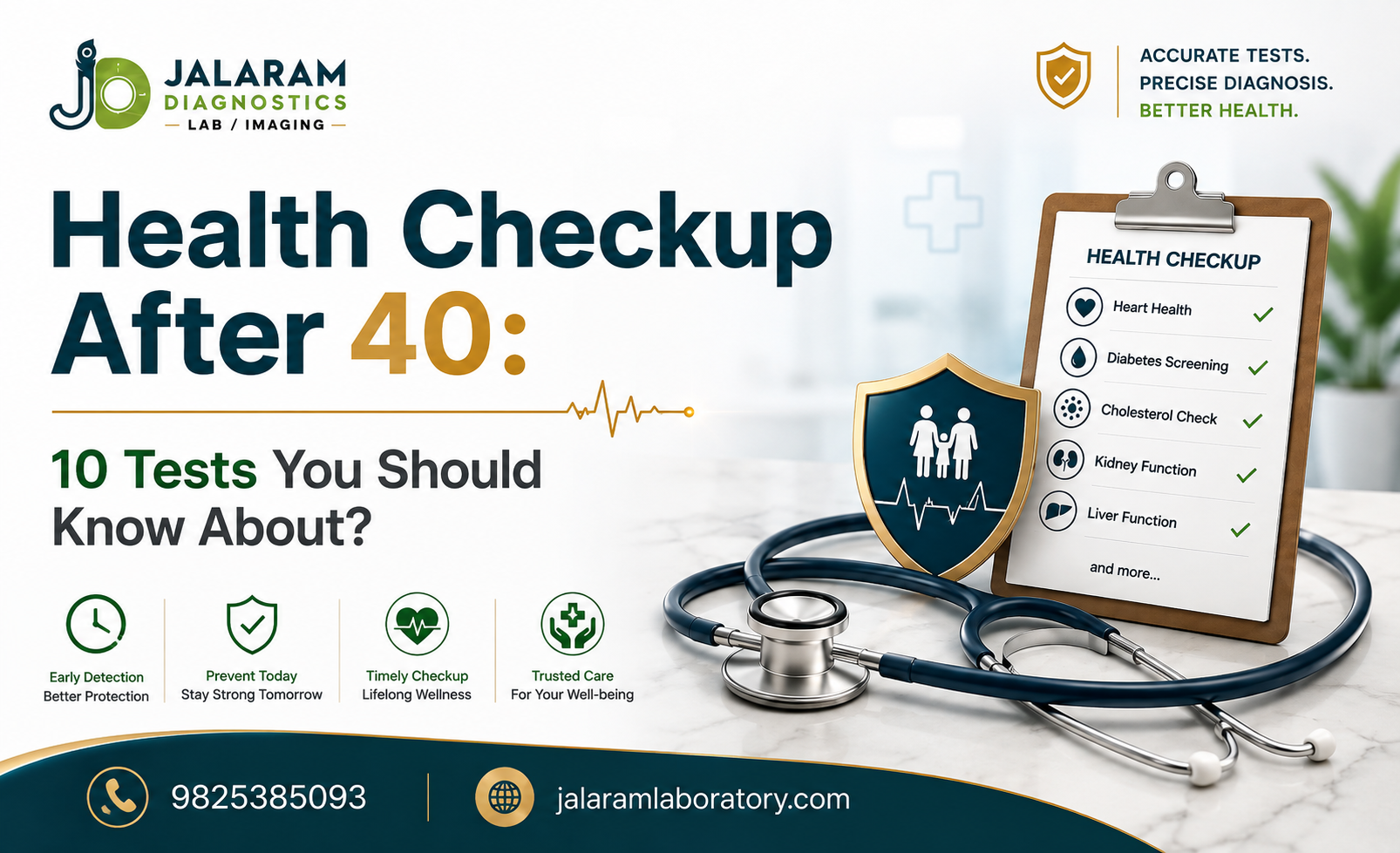
Turning 40 is an important time to become more proactive about your health. Some conditions, such as high blood pressure, diabetes and high cholesterol, can develop without noticeable symptoms. Regular health screening can help identify potential risk factors early and help you and your healthcare professional decide which tests may be appropriate. A health checkup after 40 does not mean everyone needs every available test every year. Your screening plan depends on your age, sex, family history, lifestyle, existing health conditions and previous test results. 10 Tests and Screenings to Know About After 40 Heart & Metabolic Health 1. Blood Pressure Check High blood pressure can remain unnoticed for years. Regular blood pressure checks can help identify elevated readings early. Adults aged 40 and above may benefit from regular screening, with the frequency depending on individual risk and previous readings. 2. Blood Sugar / HbA1c Fasting blood sugar and HbA1c can help assess blood glucose levels. These tests can also help screen for prediabetes and type 2 diabetes. Screening recommendations depend on age and risk factors such as overweight or obesity. Your healthcare professional can recommend the appropriate testing schedule. 3. Lipid Profile A lipid profile measures cholesterol and triglycerides. These results can help assess cardiovascular risk and support preventive health planning. Regular monitoring may be particularly useful when you have risk factors such as a family history of heart disease, diabetes or high cholesterol. Blood & Organ Health 4. Complete Blood Count (CBC) A Complete Blood Count measures different types of blood cells. It can provide useful information about conditions such as anemia and other blood-related abnormalities. Whether you need a CBC as part of routine screening depends on your symptoms, medical history and healthcare professional’s advice. 5. Kidney Function Tests Kidney function testing measures markers related to how well the kidneys are working. These tests may be particularly relevant for people with diabetes, high blood pressure or other kidney-related risk factors. Your healthcare professional can determine which kidney tests are appropriate for you. 6. Liver Function Tests Liver function testing measures several markers that provide information about liver health. Testing may be recommended based on symptoms, medical history, medication use or other risk factors. Routine testing is not necessarily required for everyone. Hormonal & Cardiac Screening 7. Thyroid Tests Tests such as TSH, T3 and T4 may be recommended when thyroid problems are suspected. Symptoms, medical history and previous results can help determine whether thyroid testing is appropriate. Your healthcare professional can advise which thyroid tests may be needed. 8. ECG / Heart Screening An ECG records the heart’s electrical activity. It can provide useful information when certain heart-related symptoms or concerns are present. An ECG is not automatically required simply because someone has reached 40. The need for cardiac screening depends on symptoms, medical history and cardiovascular risk. Age-Appropriate & Nutritional Screening 9. Cancer Screening Cancer screening should be based on the type of cancer, age and individual risk. For example, the U.S. Preventive Services Task Force recommends mammography every two years for women aged 40–74. Colorectal cancer screening is recommended beginning at age 45 for average-risk adults. Screening recommendations can vary based on personal and family history, so discuss appropriate screening with your healthcare professional. 10. Vitamin and Nutritional Tests Tests such as Vitamin B12, Vitamin D and iron studies may be considered when symptoms, dietary factors or medical history suggest a possible deficiency. These tests are not necessarily required for everyone. Testing should be based on individual needs and professional advice. Does Everyone Need a Full Body Checkup After 40? A full body health checkup can be useful as part of preventive healthcare, but there is no single set of tests that is right for everyone. Some people may need more frequent monitoring because of family history, lifestyle, existing health conditions or previous abnormal results. Others may need specific screenings at longer intervals. The goal is not to take every possible test. The goal is to identify the screenings and diagnostic tests that are relevant to your health. How Jalaram Diagnostics Can Help Jalaram Diagnostics supports preventive health screening with a range of diagnostic services under one roof. Its specialized health panels cover areas such as: Jalaram Diagnostics also provides pathology, imaging and cardiac diagnostic services. Multiple reports can be available within a short turnaround time, with many reports available on the same day. This can make it easier to organize your preventive health screening and keep track of important health information. Why Regular Health Screening Matters After 40 Your health needs can change as you get older. Regular screening can help you and your healthcare professional monitor important risk factors and decide when further evaluation may be needed. Instead of waiting for symptoms to appear, preventive healthcare focuses on understanding your health risks and taking appropriate action early. Frequently Asked Questions Is a full body checkup necessary after 40? Preventive screening can be useful after 40, but the tests you need should be based on your individual health profile rather than a fixed list. Should I get all 10 tests every year? Not necessarily. Some tests may be repeated regularly, while others may be recommended at different intervals or only when specific symptoms or risk factors are present. What should I include in a health checkup after 40? A healthcare professional can help determine the appropriate combination of blood tests, cardiovascular assessments and age- or risk-based screenings for you. How often should you get a health checkup after 40? There is no single schedule that applies to everyone. The frequency of your health checkups depends on your age, health history, risk factors, previous results and the type of screening involved. What age should you start a full body health checkup? There is no universal age at which everyone must begin a full body checkup. Around 40 can be a useful time to discuss preventive screening with a healthcare professional and review your individual risk factors. Take the Next Step Towards Preventive Health Your
A full body health checkup can help you understand important aspects of your health, even when you feel completely well. But how often should you get a full body health checkup? There is no single schedule that works for everyone. Your age, family history, lifestyle, existing health conditions, and previous test results can all influence how frequently you may need health screening. A full body health checkup is also not one standardized test. Different packages may include blood sugar, cholesterol, liver and kidney tests, thyroid testing, blood counts, vitamins, urine tests, and other investigations. The right tests and their frequency should be based on your individual health needs. What Is a Full Body Health Checkup? A full body health checkup is a group of preventive health tests designed to assess different areas of your health. Depending on the package, it may include tests such as CBC, fasting blood sugar, HbA1c, lipid profile, liver profile, kidney profile, thyroid tests, Vitamin D, Vitamin B12, urine testing, and other investigations. These tests can provide useful information about conditions or risk factors that may not always cause noticeable symptoms in their early stages. How Often Should You Get a Full Body Health Checkup? For many adults in India, having a preventive health checkup once a year can be a practical way to keep track of overall health. However, a full body checkup does not necessarily mean getting every available test every year. The right tests and frequency can vary depending on your age, lifestyle, medical history and individual risk factors. For example, adults with a sedentary lifestyle, high stress, obesity, a family history of diabetes or heart disease, or other risk factors may benefit from more regular monitoring of blood pressure, blood sugar, cholesterol and other important health markers. Your doctor may also recommend additional or more frequent tests if you have diabetes, hypertension, abnormal cholesterol levels, obesity, or have previously received abnormal test results. In India, where conditions such as diabetes, hypertension and heart disease are increasingly common, regular preventive health checkups can help identify potential health concerns early and support timely medical guidance. Who May Need More Frequent Health Checkups? You may benefit from discussing a more personalized screening schedule with your healthcare professional if you: Preventive screening should be personalized because different health conditions require different testing intervals. What Can a Full Body Checkup Tell You? A comprehensive health checkup can help monitor important health markers such as blood sugar, cholesterol, liver function, kidney function, thyroid health, blood counts, and nutritional markers. At Jalaram Diagnostics, available health packages include multiple parameters along with options such as ECG and X-ray, depending on the selected package. Regular monitoring can also help you compare results over time and discuss meaningful changes with your healthcare professional. Frequently Asked Questions Is a full body health checkup needed every year? Not necessarily. The appropriate frequency depends on your age, health risks, medical history, and previous results. A healthcare professional can help determine which tests you need and how often. What age should you start a full body health checkup? There is no universal starting age. Preventive screening should be based on individual risk factors, family history, age, and existing health concerns. Can I get a full body checkup if I have no symptoms? Yes. Preventive health screening can help monitor important health markers even when you feel healthy. However, not every test is appropriate for every person. A full body health checkup should be viewed as part of preventive healthcare, not a replacement for medical consultation. If you are unsure which tests are appropriate for you, speak with a qualified healthcare professional. Jalaram Diagnostics provides a range of preventive health checkup packages and diagnostic services to help you monitor your health with reliable testing and professional support.

“I Feel Fine” Is Not the Same as “I’m Healthy” Around Doctors’ Day this year, several doctors across India flagged the same worrying pattern in their clinics: patients assuming that feeling fine means nothing is wrong. In reality, some of the most common conditions in India — high blood pressure, diabetes, thyroid disorders, even early-stage cancers — can quietly progress for years without a single obvious symptom. By the time symptoms do show up, the condition is often more advanced and harder to manage. Why “No Symptoms” Can Be Misleading Our bodies are surprisingly good at compensating for problems in their early stages. Blood pressure can creep up gradually without headaches or dizziness. Blood sugar can stay elevated for months before thirst or fatigue becomes noticeable. Thyroid imbalances can alter energy, weight, and mood so slowly that people simply adjust to feeling “a little off,” rather than raising an alarm. According to health experts writing around Doctors’ Day 2026, this is one of the most common and dangerous health myths — that a lack of symptoms means everything is fine (The Week, June 2026). Conditions That Often Hide in Plain Sight Hypertension (High Blood Pressure) – frequently called a “silent” condition because it rarely causes noticeable symptoms until it affects the heart, kidneys, or eyes Type 2 Diabetes – can exist for years with only mild, easy-to-dismiss symptoms like tiredness or frequent urination Thyroid Disorders – both an underactive and overactive thyroid can be mistaken for stress, weight changes, or simply “getting older” Cholesterol Imbalances – have no physical symptoms at all and are usually only caught through a blood test Early-Stage Anaemia – often shows up as general fatigue that people brush off as being busy or tired Tests & Packages Available at Jalaram Laboratory Jalaram Laboratory & Diagnostic Centre offers a range of preventive screening options designed exactly for this purpose: Full Body Health Checkup Packages – covering blood sugar, lipid profile, kidney and liver function, and more in one visit Blood Pressure & Cardiac Risk Panel – includes lipid profile and related cardiac markers HbA1c & Fasting/PP Blood Sugar Tests – to track blood sugar trends, not just a single reading Thyroid Profile (T3, T4, TSH) – to check for both underactive and overactive thyroid function CBC & Iron Studies – to catch anaemia and related deficiencies early All of these are available with home sample collection, so a full preventive checkup doesn’t have to mean taking time off or sitting in a waiting room. A Few Simple Habits That Help Get a basic health screening at least once a year, even if you feel completely fine Know your family history — many silent conditions like diabetes and hypertension run in families Don’t wait for a symptom to “confirm” something is wrong before getting tested Keep your old reports handy so your doctor can track trends over time, not just single results Book Your Preventive Checkup Today Feeling healthy is a good sign — but it isn’t a diagnosis. If it’s been a while since your last full body checkup, there’s no better time than now. Jalaram Laboratory & Diagnostic Centre in Bardoli offers comprehensive health packages with easy home sample collection, so you can know what’s really going on inside, not just how you feel on the outside. Book your checkup today. Source referenced: “Doctors’ Day 2026: Debunking five common myths harming your health,” The Week (published June 30, 2026). This article is for general awareness only and does not constitute medical diagnosis — please consult a physician for personalised advice.

Every year as the rains set in across Gujarat, hospitals and labs see a sharp rise in fever cases. This July, health reporters have already flagged renewed vector-borne activity in the state, and civic health data from other Indian cities shows the same pattern repeating right on schedule. The good news? Most monsoon fevers are very manageable — if they’re identified early with the right blood test. Why This Matters Right Now Monsoon creates the perfect breeding ground for mosquitoes and contaminated water — the two biggest carriers of seasonal illness in India. Municipal health data from Delhi published in late June 2026 noted that dengue, malaria, and chikungunya numbers typically climb through July, August, and September, with July being when transmission really starts building. Gujarat sees a similar seasonal curve, and local health experts have also urged extra caution around unusual monsoon-linked infections affecting children this year, in a report published in the first half of July 2026 (Vibes of India, July 2026). None of this is cause for panic — it’s simply a reminder that “just a viral fever” deserves a closer look during these months. The Fevers to Know Dengue – spread by the Aedes mosquito, which breeds in clean standing water (coolers, flower pots, tanks). Symptoms: high fever, severe body/joint pain, headache behind the eyes, and sometimes a skin rash. Chikungunya – also Aedes-borne, causing high fever with intense, often prolonged joint pain and swelling. Malaria – spread by the Anopheles mosquito, typically causing fever with chills, sweating cycles, and fatigue. Typhoid – spread through contaminated food or water, common during monsoon flooding, causing sustained fever, weakness, and abdominal discomfort. Because these illnesses often start with the same generic symptoms — fever, fatigue, body ache — it’s genuinely hard to tell them apart without a lab test. Why Early Detection Matters Self-medicating a “normal fever” for 4–5 days before getting tested is one of the most common reasons monsoon illnesses become complicated. Dengue, for instance, can affect platelet counts, and typhoid can worsen if antibiotics are delayed or misused. Getting tested within the first couple of days of fever gives your doctor accurate information to treat you appropriately — rather than guessing — and helps you avoid unnecessary complications or hospitalisation. Tests Available at Jalaram Laboratory Jalaram Laboratory & Diagnostic Centre offers a complete monsoon fever workup, including: CBC (Complete Blood Count) – tracks platelet levels, white blood cells, and overall infection response Dengue NS1 Antigen & Dengue IgM/IgG – for early and confirmatory dengue detection Malaria Parasite (MP) Smear / Rapid Antigen Test – for quick malaria diagnosis Typhidot / Widal Test – for typhoid detection Chikungunya IgM Antibody Test – to confirm chikungunya infection All of these can be booked individually or as part of a combined fever profile, with results explained in simple terms — and home sample collection is available if you’d rather not step out while unwell. Prevention Tips for the Season Empty and cover water storage containers, coolers, and flower pots weekly Use mosquito nets or repellents, especially at dawn and dusk Drink boiled or filtered water, and avoid street food during heavy rain spells Don’t wait out a fever — track it, stay hydrated, and see a doctor if it crosses 2 days Book Your Test Today If you or a family member has had fever for more than a day or two this monsoon, don’t guess — get tested. Jalaram Laboratory & Diagnostic Centre in Bardoli offers fast, reliable fever panel testing with the option of home sample collection, so you can get answers without leaving your house. Call us or book online today to take the guesswork out of this monsoon season. Sources referenced: Municipal Corporation of Delhi vector-borne disease data via The Week (published late June 2026); Vibes of India, monsoon vector-borne disease report (published July 2026). This article is for general awareness only and does not constitute medical diagnosis — please consult a physician for symptom-specific advice.