
17Nov
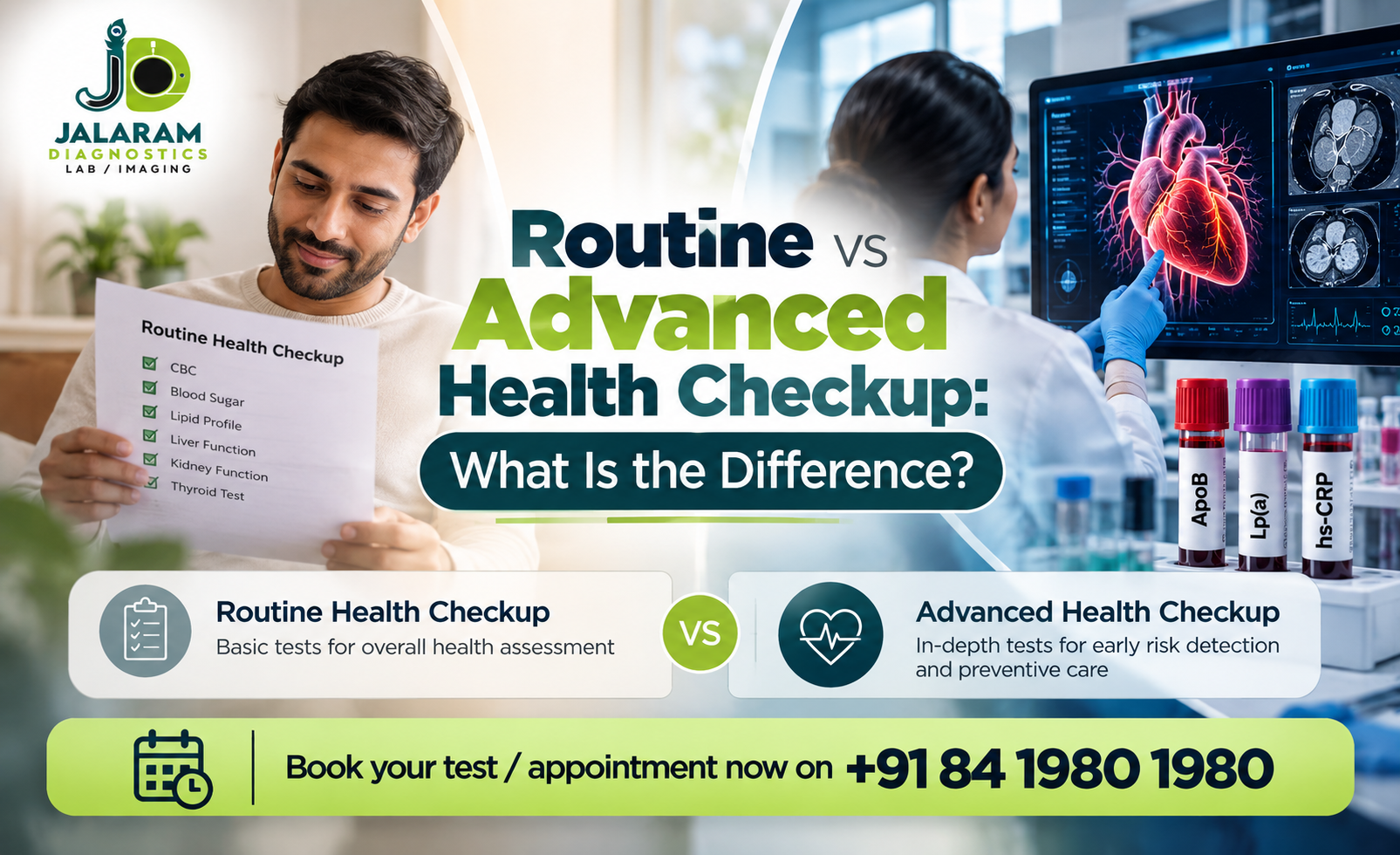
Routine vs Advanced Health Checkup: What Is the Difference?
A routine health checkup is a useful starting point for understanding your health. It can help identify common concerns related to blood sugar, cholesterol, kidney function, liver function and other important health indicators. However, some people may need a more detailed assessment based on their age, family history, lifestyle, existing medical conditions or initial test results. This is where an advanced preventive health assessment may be considered. At Jalaram Diagnostics, the focus goes beyond simply counting the number of tests. The goal is to help people understand which investigations may provide meaningful information about their individual health risks. What Is a Routine Health Checkup? A routine health checkup generally includes commonly recommended tests that help assess general health and identify potential concerns. Depending on the person’s age and medical history, it may include: These investigations can help detect abnormalities and support the early evaluation of certain health conditions. However, the exact tests required vary from person to person. A routine package is not a substitute for a medical history, physical examination or appropriate clinical screening. What Is an Advanced Health Checkup? An advanced health checkup involves a more targeted assessment of specific health risks that may not be fully evaluated by routine investigations alone. Rather than adding every available test, a doctor may recommend specialised blood tests, additional risk markers or imaging based on the individual’s clinical profile. Examples may include: Advanced heart-risk markers: Tests such as Apolipoprotein B (ApoB), Lipoprotein(a) [Lp(a)] and high-sensitivity C-reactive protein (hs-CRP) may provide additional information in selected cardiovascular risk assessments. Metabolic health assessment: When clinically appropriate, further evaluation may help investigate insulin resistance or metabolic concerns that are not fully explained by a single blood glucose result. Advanced cardiac imaging: Coronary Artery Calcium (CAC) scoring or Coronary CT Angiography (CCTA) may be considered for selected patients when a clinician needs additional information about coronary artery disease risk or the coronary arteries themselves. Targeted nutritional assessment: Tests for iron, vitamin B12, vitamin D or magnesium may be considered when symptoms, dietary factors, medical history or other findings suggest a need. These tests serve different purposes. Not every person requires them, and some investigations are appropriate only after clinical evaluation. Routine vs Advanced Health Checkup: Key Differences A routine checkup provides a general overview using commonly recommended tests. An advanced assessment explores particular risks in greater detail when additional information may influence clinical decisions. For example, a standard lipid profile measures cholesterol and triglycerides. In selected situations, ApoB testing may provide additional information about the number of atherogenic lipoprotein particles. Similarly, a normal fasting blood glucose result does not answer every question about metabolic health. If other findings suggest a concern, a doctor may recommend further assessment. The important difference is not simply the number of tests performed. It is whether the selected tests address a relevant health question. Who May Benefit From an Advanced Preventive Assessment? An advanced assessment may be worth discussing with a doctor if you have: Even if your previous reports are within their reference ranges, your overall risk may depend on several factors. At the same time, normal results can be reassuring, and additional testing is not automatically necessary. Does an Advanced Checkup Replace a Routine Checkup? No. Advanced testing generally complements routine evaluation rather than replacing it. Routine tests remain important for assessing common health indicators. Advanced investigations may be added when they answer a specific clinical question or help clarify risk. Some advanced tests also have limitations, and abnormal results may require further evaluation. More testing can sometimes lead to unnecessary follow-up, so test selection should be guided by medical advice. How Jalaram Diagnostics Can Help Jalaram Diagnostics in Bardoli provides diagnostic services to support routine testing and more specialised health assessments. From common laboratory investigations to selected advanced heart-risk markers and other targeted tests, the appropriate approach depends on your individual needs. If you are considering an advanced preventive health assessment, discuss your medical history, family history and previous reports with your doctor. The aim is to choose relevant investigations that support informed health decisions—not to perform every available test. Book your test / appointment now on +91 84 1980 1980