
22Oct
Calcium Score vs CCTA: Which Heart Scan Helps Assess Your Risk?
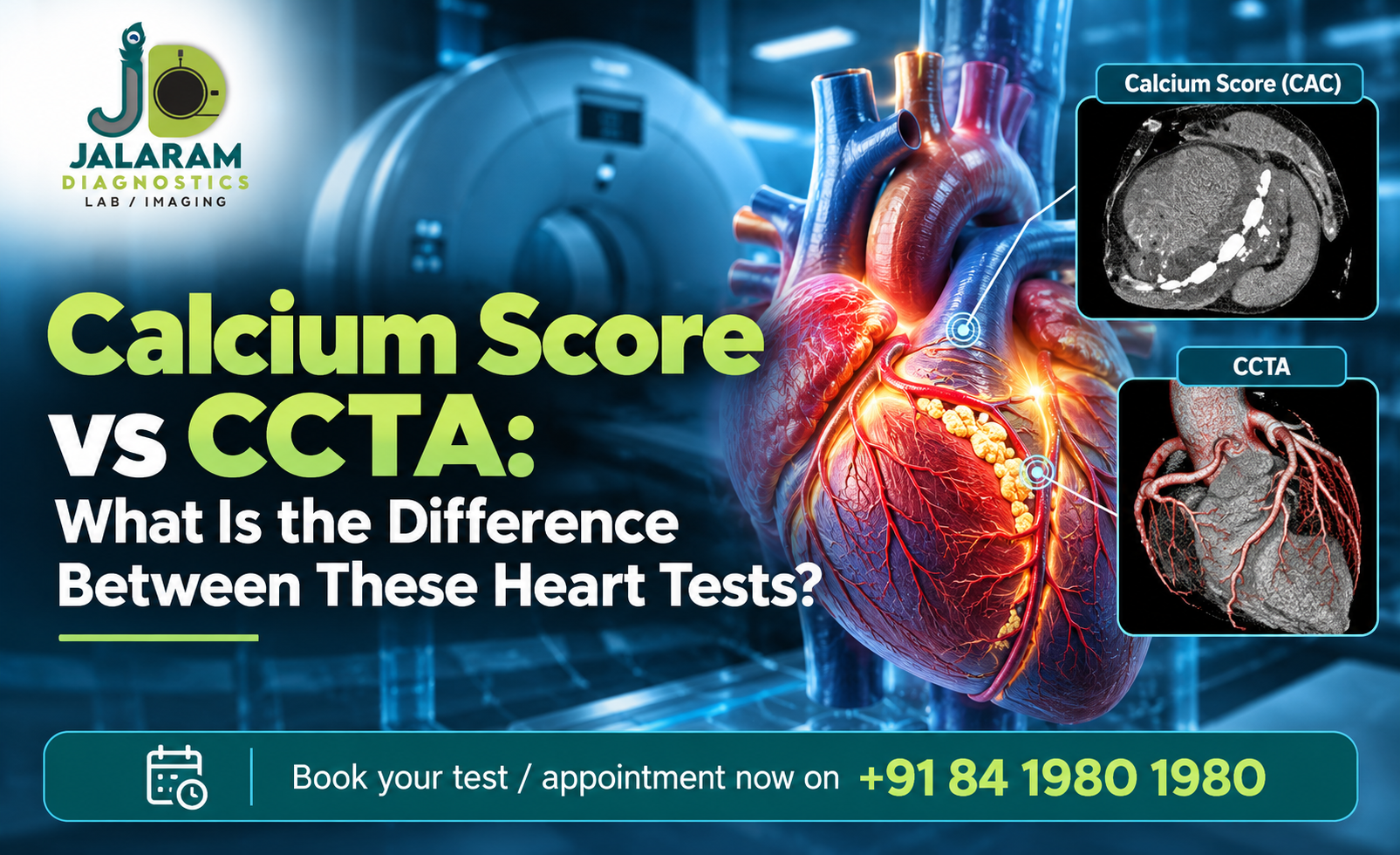
A normal cholesterol report does not always tell the complete story of your heart health. In selected individuals, advanced cardiac imaging can help doctors understand whether plaque has started building up in the coronary arteries. Two tests that may be recommended for different clinical purposes are the Coronary Artery Calcium (CAC) Score and Coronary CT Angiography (CCTA). Although both use CT technology, they answer different questions. What Is a Coronary Calcium Score? A Coronary Calcium Score is a specialised CT scan that detects and measures calcium deposits in the coronary arteries—the blood vessels that supply oxygen-rich blood to the heart. These deposits are associated with calcified atherosclerotic plaque. The scan produces a calcium score that helps doctors assess the burden of calcified plaque and refine cardiovascular risk in selected people. The Lipid Association of India recommends considering calcium scoring when further risk assessment may help guide preventive decisions, particularly when a person’s overall risk remains uncertain. However, a score of zero does not rule out every form of coronary plaque. <Source: Lipid Association of India, 2023 update, published in 2024.> What Is CCTA? Coronary CT Angiography (CCTA) is a CT scan that uses contrast material injected into a vein to create detailed images of the coronary arteries. It helps doctors evaluate the coronary arteries for plaque and narrowing. Unlike a calcium score, CCTA can also show non-calcified plaque, which may not be detected by a calcium-scoring scan. Doctors may consider CCTA when symptoms, clinical findings or other test results warrant a closer assessment of the coronary arteries. It is not a routine screening scan for everyone. Calcium Score vs CCTA: Key Differences Coronary Calcium Score Coronary CT Angiography (CCTA) Neither scan is automatically better for every person. The right choice depends on symptoms, medical history, risk factors, kidney function, previous investigations and the clinical question the doctor needs answered. Who May Need These Tests? A calcium score may be considered when cardiovascular risk is uncertain and the result could influence preventive treatment decisions. Factors such as a strong family history of early heart disease, multiple cardiovascular risk factors or suspected inherited cholesterol problems may influence that discussion. CCTA may be considered when a doctor needs to investigate symptoms or assess the coronary arteries in greater detail. Important: If you have chest pain, breathlessness or other possible cardiac symptoms, seek medical advice promptly. Severe or sudden chest discomfort, especially with sweating, faintness or breathlessness, requires emergency assessment. Do not choose a scan yourself or delay urgent care while arranging a preventive test. Does a Normal Cholesterol Report Mean Your Arteries Are Clear? Not necessarily. Cholesterol results are one part of cardiovascular risk assessment. Family history, blood pressure, diabetes, smoking, lifestyle and other clinical factors also matter. Imaging can provide additional information in selected cases, but neither a calcium score nor CCTA replaces a complete medical assessment. A normal result also cannot guarantee that a heart problem will never develop. How Jalaram Diagnostics Can Help Understanding which cardiac investigation is appropriate starts with the right medical guidance. Jalaram Diagnostics, Bardoli, supports patients with diagnostic services and imaging facilities to help doctors evaluate health concerns. If you have been advised to undergo a Coronary Calcium Score or CCTA, discuss the indication, preparation and suitability of the examination with your treating doctor and the diagnostic team. The aim is to choose an investigation that answers the relevant clinical question rather than undergoing unnecessary testing. Book your test / appointment now on +91 84 1980 1980 Frequently Asked Questions 1. Is a calcium score the same as CCTA?No. Calcium scoring measures calcified plaque, while CCTA creates detailed images of the coronary arteries and can evaluate different types of plaque and narrowing. 2. Can a calcium score of zero rule out heart disease?No. It indicates that detectable coronary calcium was not found, but non-calcified plaque and other heart conditions may still be present. 3. Which scan should I choose?Your doctor should recommend the appropriate test based on your symptoms, risk profile and the information needed. These scans are not interchangeable.